



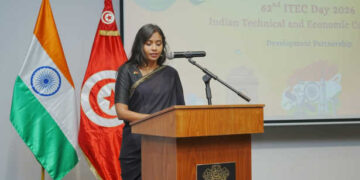
























On the occasion of the celebration of the 62nd ITEC Day 2026, the Embassy of India in Tunisia highlighted more than six decades of cooperation through the Indian Technical and Economic Cooperation (ITEC) Programme, placing capacity building, knowledge sharing and human connections at the heart of India-Tunisia relations.
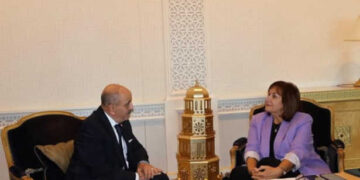
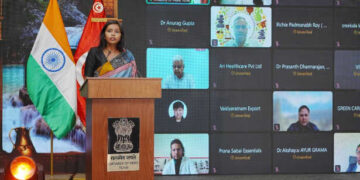
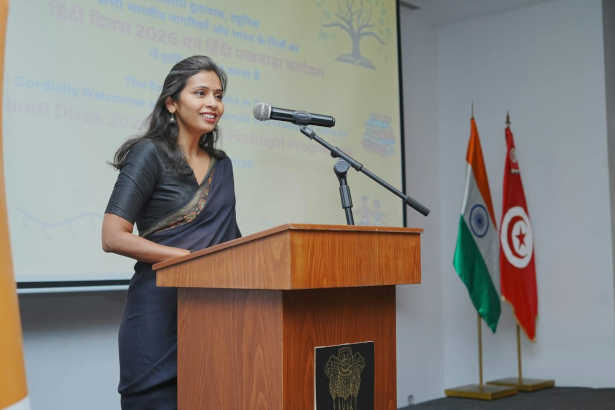
The ceremony, held on 4 October 2026 at Hotel Mövenpick in Gammarth, brought together H.E. Mr. Mourad Bellassoued, Chief of Cabinet at the Ministry of Higher Education and Scientific Research, representatives of the Tunisian Government, ITEC alumni and friends of the Embassy.
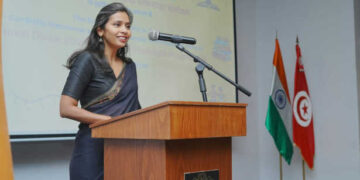
Welcoming the participants, the Ambassador of India, Dr. Devyani U. Khobragade, expressed her appreciation to Mr. Bellassoued for joining the celebration as Chief Guest and emphasized that ITEC Day was not simply an occasion to commemorate a government programme, but an opportunity to celebrate more than sixty years of partnership built around knowledge, professional skills, institutional capacity and lasting human connections.
Established on 15 September 1964, the Indian Technical and Economic Cooperation Programme has developed into one of India’s flagship instruments of international development cooperation and one of the world’s longstanding institutional frameworks for capacity building.
The Ambassador underlined that ITEC reflects India’s distinctive approach to development partnership, based on mutual respect, mutual benefit and responsiveness to the priorities identified by partner countries themselves. At its core is the conviction that development experience gains greater value when it is shared.
This philosophy also resonates with the Indian civilisational principle of Vasudhaiva Kutumbakam — “the world is one family” — which places cooperation, knowledge sharing and solidarity at the centre of India’s engagement with partner countries.
ITEC: Six Decades of Capacity Building
Over the past six decades, ITEC has expanded significantly. More than 225,000 officials and professionals from over 160 partner countries, from both civilian and defence sectors, have benefited from training and capacity-building opportunities under the programme.
As the needs of partner countries have evolved, so too has ITEC. Recent programmes have increasingly addressed emerging and strategic fields, including artificial intelligence in governance, cybersecurity, quantum computing, digital transformation, climate change, innovation, entrepreneurship and startup ecosystems.
The programme has also diversified the ways in which training and expertise are delivered. Alongside regular programmes held in India, ITEC now includes customised country-specific training, e-ITEC programmes, ITEC-Onsite initiatives, executive programmes for senior policymakers, study and exposure visits, the deputation of Indian experts and defence training.
According to the Ambassador, ITEC therefore extends far beyond conventional classroom training. Participants are given opportunities to interact with Indian professionals and institutions, exchange experiences with counterparts from other countries and gain first-hand insight into India’s development journey and diversity.
Tunisia, a Valued ITEC Partner
Tunisia has been an important partner in the ITEC journey. More than 1,000 Tunisian nationals have so far benefited from training programmes in a wide range of sectors.
Looking ahead, the Ambassador stressed the importance of making full and strategic use of the 100 ITEC slots available annually to Tunisia. She also called for stronger cooperation among the Ministry of Foreign Affairs, Migration and Tunisians Abroad, the Presidency of the Government, line ministries and relevant institutions to ensure wider dissemination of ITEC opportunities and timely nominations.
The future direction of ITEC cooperation between India and Tunisia is also closely linked to the priorities identified during the Sixth India-Tunisia Foreign Office Consultations, held in Tunis in March 2026.
During the consultations, both sides identified several emerging areas for expanded cooperation, including agriculture, water management, renewable energy and digital public infrastructure. These priorities complement India’s broader bilateral approach towards Tunisia, which places particular emphasis on the three interconnected areas of Trade, Technology and Training.
These fields, the Ambassador noted, provide a natural foundation for strengthening the next phase of ITEC cooperation and ensuring that capacity-building programmes respond increasingly closely to Tunisia’s evolving development requirements.
ITEC Alumni: Ambassadors of Cooperation
A central part of the celebration was dedicated to the Tunisian alumni of the ITEC programme, who were described as among its most convincing ambassadors.
The Ambassador emphasized that the success of a capacity-building programme should not be measured solely by the certificate awarded at the end of a course. Its true impact becomes visible when the knowledge acquired in India is translated into practical results: improved systems, stronger institutions, new professional networks and enhanced cooperation.
She encouraged Tunisian ITEC alumni to remain closely connected with the Embassy and with one another, to share their professional achievements and explain how their training in India has contributed to their work and institutions.
The alumni were also encouraged to promote the programme among colleagues, support future nominees and help identify new areas in which ITEC could respond more effectively to Tunisia’s needs.
In this sense, the alumni network represents an important bridge between India and Tunisia, transforming individual training experiences into broader institutional and professional partnerships.
Looking Ahead
The 62nd ITEC Day celebration also provided an opportunity to acknowledge the continued cooperation of the Tunisian Government, particularly the Ministry of Foreign Affairs, Migration and Tunisians Abroad, the Presidency of the Government, as well as the various ministries, departments and institutions involved in the programme.
The Ambassador also recognized the contribution of Indian training institutions, faculty members and experts whose work makes ITEC programmes possible, as well as the commitment of Tunisian alumni who continue to carry forward the experience and knowledge gained through their training in India.
As the celebration concluded, attention turned to the personal experiences of the alumni themselves, who shared reflections on their time in India, the knowledge they acquired, the friendships they developed and the ways in which their training has contributed to their professional careers and the institutions they serve.
More than six decades after its creation, ITEC continues to demonstrate how capacity building can serve as a lasting instrument of international cooperation. For India and Tunisia, the programme represents not only an opportunity to develop professional skills, but also a platform for strengthening institutional ties, encouraging innovation and creating enduring people-to-people connections.
The 62nd ITEC Day thus offered both a moment to celebrate the achievements of the past and an opportunity to look towards a new phase of India-Tunisia cooperation — one increasingly shaped by technology, innovation, training and shared development priorities.